
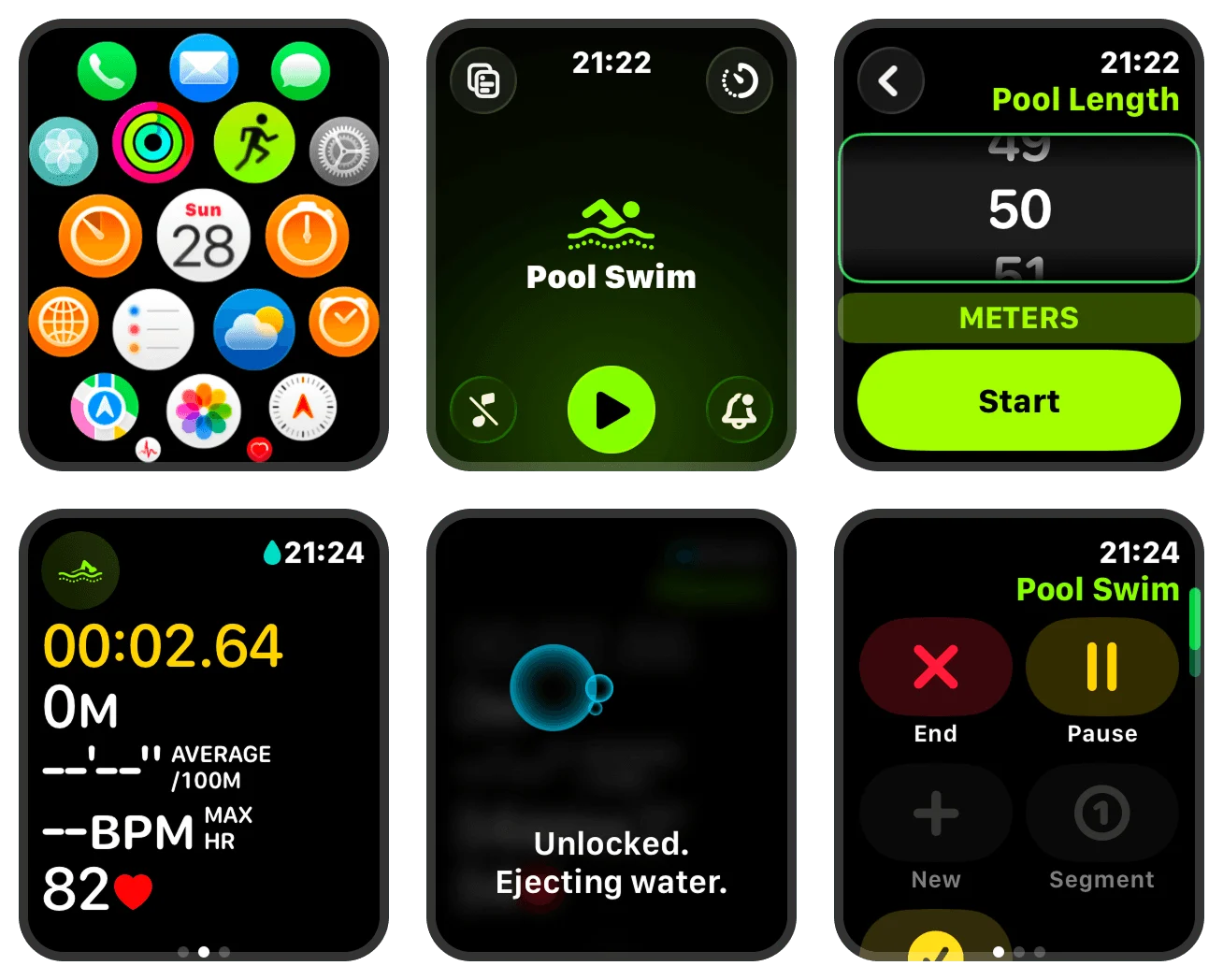
Apple Watch swimming data is most useful when you check the distance first, keep the units consistent and compare similar sessions. This guide explains how to read a saved swim and decide which numbers need a closer look.
Before recording your first swim
Check whether your Apple Watch model and band are suitable for swimming. For the recording controls, follow how to turn on Apple Watch swimming mode. Return here after saving the workout to interpret the results.
Review the saved workout on iPhone
Open the Fitness app and select the swimming workout from your session history. Health stores workout information used by connected apps, subject to permissions. A different app may group or display the record differently, so compare the same metric and units before assuming the underlying data changed.
What the swimming metrics mean
| Metric | How to use it |
|---|---|
| Distance and lengths | Compare with a known count and the selected pool length before analyzing pace. |
| Pace | Time per stated distance, often per 100 meters or yards. Lower means faster only when the units match. |
| Stroke count | Compare similar swimming with the same counting method. Fewer strokes alone does not establish better technique. |
| Stroke rate | Strokes per minute. Interpret alongside pace and stroke count. |
| Heart rate | Check for missing readings before comparing averages across sessions. |
| SWOLF | Seconds plus strokes for one pool length. Compare the same pool length and stroke. |
| Auto Sets | Detected swimming and rest groups. Compare them with your planned repeats. |
For example, a 100-meter repeat completed in two minutes has a pace of 2:00 per 100 meters. A 100-yard repeat in the same time has a pace of 2:00 per 100 yards; these are different speeds. Keep the unit with the number in your training notes.
Resolve errors before drawing training conclusions
- Missing lengths or an incorrect total distance
- Incorrect stroke labels
- Missing heart rate readings
- Unexpected set boundaries
- SWOLF scores that need context
Once the record is consistent, compare a repeatable set across sessions. Keep the distance, stroke, pool length, and rest approach the same, and record the change you are trying to assess.